Logo of the Omni Institute Logo of the Omni Institute
  • Home
  • Provider Overview
  • Program Breakdown
  • Supplemental Materials

On this page

  • Key Metrics
  • Quarterly Narratives
  • Community Engagement & Staff Training
  • Client Services & Baseline Data
  • Discharges
  • Demographics

Provider Overview

This website presents an example site-level HTML progress report for illustrative purposes only. All provider names, place names, and data shown here are fictional.

This page presents key metrics by provider alongside cumulative data, with line graphs showing monthly trends over time from July to December 2025. It also includes a summary of key successes and challenges synthesized from the monthly narratives for Quarter 2 (October to December).

The following definitions explain how selected client metrics are used throughout this page.

  • Total Primary Clients: Count includes all new primary clients.
  • Average Monthly Clients: This calculation is based on counts of all primary and secondary clients, including both new and continuing clients.
  • New Clients: Count includes all new primary and secondary clients.

Key Metrics

This table summarizes key metrics by provider. Click column headers to sort.

TipAlignment with Evaluation Plan

Objective 1: Scope and Reach of Programs

  • How many people does each provider serve, and what are the target populations?
  • How do participant behaviors and outcomes change over time, and what types of program activities are being implemented and how often?

*Indicates that all providers have a target of completing Baseline Data for 100% of new clients. Vertical green lines represent provider targets for positive outcome discharges.

Note: Vertical green lines represent provider targets for positive outcome discharges.

Quarterly Narratives

Quarter 2 successes and challenges from provider monthly narratives are summarized below.

Successes

NoteSunrise Youth Mentors

The mentoring program experienced strong enrollment growth in the fall, with participation increasing by approximately 25% and remaining steady through the holiday season. Provider staff organized a well-attended community celebration event that drew participation from both youth and their families. Later in the quarter, the program hosted a staff professional development session to introduce a new coordination platform, prompting constructive discussions around improving program processes and supporting mentor engagement.

NoteCommunity Connections Club

Community Connections Club successfully engaged youth and the broader community through cultural and educational activities at multiple school sites, all completed on time. These events reinforced the program’s social-emotional learning curriculum, which focuses on emotional wellness, healthy relationships, and mental health. As shared by staff, “our members were able to demonstrate a lot of the material they learn,” using artistic expression and community engagement as healthy alternatives for coping with difficult emotions while strengthening connections to their communities.

NoteCentro Familiar

Centro Familiar demonstrated strong therapeutic and case management outcomes across clients with diverse and complex needs, marked by improved communication, emotional regulation, and self-efficacy. Clients showed increased engagement in therapy through the use of coping strategies such as journaling, mindfulness, and therapeutic play, leading to reduced anxiety, better emotional expression, and stronger family relationships. Several clients made meaningful life transitions, including pursuing education, securing employment, and taking proactive steps toward independence. One client reflected on this growth, stating, “I can feel myself growing, I feel I learned a lot in therapy,” while another shared feeling “good about therapy” after building trust and safety with their therapist. These outcomes highlight the program’s success in fostering resilience, trust, and personal growth through individualized, trauma-informed, and culturally responsive care.

NoteComunidad Adelante

Comunidad Adelante continued using social needs assessments to identify and respond to participant needs and connect families to local resources that support household health and wellness. Staff at one site effectively applied specialized training to enhance service delivery, noting that “we were able to address and accommodate their individual needs” by thoughtfully adapting programming and creating supportive subgroups for children with additional needs. This approach allowed staff to put their specialized training into practice while ensuring all participants remained fully supported, engaged, and included in the program.

NoteFamily Hope Services

Family Hope Services supported families in achieving greater stability through housing, employment, and reunification outcomes, including clients transitioning out of emergency housing into their own apartments, securing housing vouchers, and obtaining employment with case management support. The program completed new client intakes, assigned participants to upcoming group services, and connected families to additional in-agency resources, while also providing seasonal support through holiday distributions of essential household items. One success story highlights the impact of this work: “with guidance and support, she was able to secure stable housing,” reconnect her children to educational and support services, and move toward stability despite significant challenges—demonstrating how consistent guidance, community support, and perseverance can empower families to make meaningful progress.

NoteYouth Forward Initiative

Youth Forward Initiative staff strengthened service delivery by completing specialized certifications and participating in trainings that deepened their understanding of how adverse childhood experiences impact behavior and development, enhancing their ability to provide trauma-informed, family-centered care. These efforts supported more responsive service planning while the program also addressed immediate family needs through distribution of food boxes, educational materials, and seasonal essentials. As staff noted, “these outcomes ensured that the families and clients we serve had their basic needs met,” while flexible scheduling and alternative meeting locations helped maintain consistent engagement and progress toward therapeutic and case management goals during the holiday season.

Challenges

NoteClient needs/systemic barriers

Client needs/systemic barriers are challenges experienced by clients that hinder their ability to participate in provider services. These include challenges related to transportation to program sessions or activities, access to technology or connectivity, familial responsibilities, and broader systemic barriers (e.g., undocumented status or client trauma).

NoteHoliday or seasonal timing challenges

Holiday or seasonal timing challenges refer to disruptions associated with November and December holidays that hinder program implementation. This includes delays in programming, fewer available school days, and increased family appointment cancellations.

NoteOrganizational challenges

Organizational challenges are related to barriers occurring within a program’s organization that affect implementation. These challenges include funding changes or loss of funding to support activities, delayed program enrollment, and leadership shifts.

NoteOther types of challenges

Other types of challenges refer to barriers that did not fit into the other categories. These include school scheduling issues, decreased class attendance, and no new enrollments.

Community Engagement & Staff Training

This section presents monthly data, by provider, on community events, street outreach events, and staff trained.

TipAlignment with Evaluation Plan

Objective 1: Scope and Reach of Programs

  • What types of program activities are being implemented, and how often?
138

Total Community Events

across all providers

July to December 2025

75

Total Street Events

across all providers

July to December 2025

146

Total Staff Trained

across all providers

July to December 2025

Community Events

Comunidad Adelante does not collect data on community events because it is not a part of their program model.

  • Sunrise Youth Mentors
  • Community Connections Club
  • Centro Familiar
  • Family Hope Services
  • Youth Forward Initiative

Street Events

  • Sunrise Youth Mentors
  • Community Connections Club
  • Centro Familiar
  • Comunidad Adelante
  • Family Hope Services
  • Youth Forward Initiative

Client Services & Baseline Data

This section presents monthly data, by provider, on total new clients, average monthly clients, and the overall percentage of new clients with Baseline Data.

TipAlignment with Evaluation Plan

Objective 1: Scope and Reach of Programs

  • How many people does each provider serve? What are the target populations?
1209

Total New Clients

across all providers

July to December 2025

1166

Total New Primary Clients

across all providers

July to December 2025

New Clients

This includes primary and secondary new clients, where applicable.

  • Sunrise Youth Mentors
  • Community Connections Club
  • Centro Familiar
  • Comunidad Adelante
  • Family Hope Services
  • Youth Forward Initiative

Average Monthly Clients

This includes all primary and secondary clients, both new and continuing.

Sunrise Youth Mentors
373

average monthly clients

Community Connections Club
310

average monthly clients

Centro Familiar
14

average monthly clients

Comunidad Adelante
33

average monthly clients

Family Hope Services
148

average monthly clients

Youth Forward Initiative
44

average monthly clients

Overall Percentage of New Clients with Baseline Data

Please note, all providers have a target of 100% new clients with Baseline Data.

Sunrise Youth Mentors

67%

of new clients have Baseline Data.

Below target

Community Connections Club

98%

of new clients have Baseline Data.

Meeting target

Centro Familiar

69%

of new clients have Baseline Data.

Below target

Comunidad Adelante

100%

of new clients have Baseline Data.

Meeting target

Family Hope Services

97%

of new clients have Baseline Data.

Meeting target

Youth Forward Initiative

51%

of new clients have Baseline Data.

Below target

Discharges

This section presents the overall percentage of positive outcome discharges, by provider.

TipAlignment with Evaluation Plan

Objective 2: Program Strengths and Challenges

  • What are the barriers to program implementation and participant success, and how are these being addressed?
  • How do participant behaviors and outcomes change over time?
339

Total Discharges

across all providers

July to December 2025

261

Total Positive Outcome Discharges

across all providers

July to December 2025

Overall Percentage of Positive Outcome Discharges

Sunrise Youth Mentors and Community Connections Club do not collect data on positive outcome discharges because it is not a part of their program model.

Centro Familiar

98%

of discharges are positive outcome discharges.

Surpassing their target of 85% positive outcome discharges

Comunidad Adelante

100%

of discharges are positive outcome discharges.

Surpassing their target of 80% positive outcome discharges

Family Hope Services

95%

of discharges are positive outcome discharges.

Surpassing their target of 80% positive outcome discharges

Youth Forward Initiative

98%

of discharges are positive outcome discharges.

Surpassing their target of 80% positive outcome discharges

Demographics

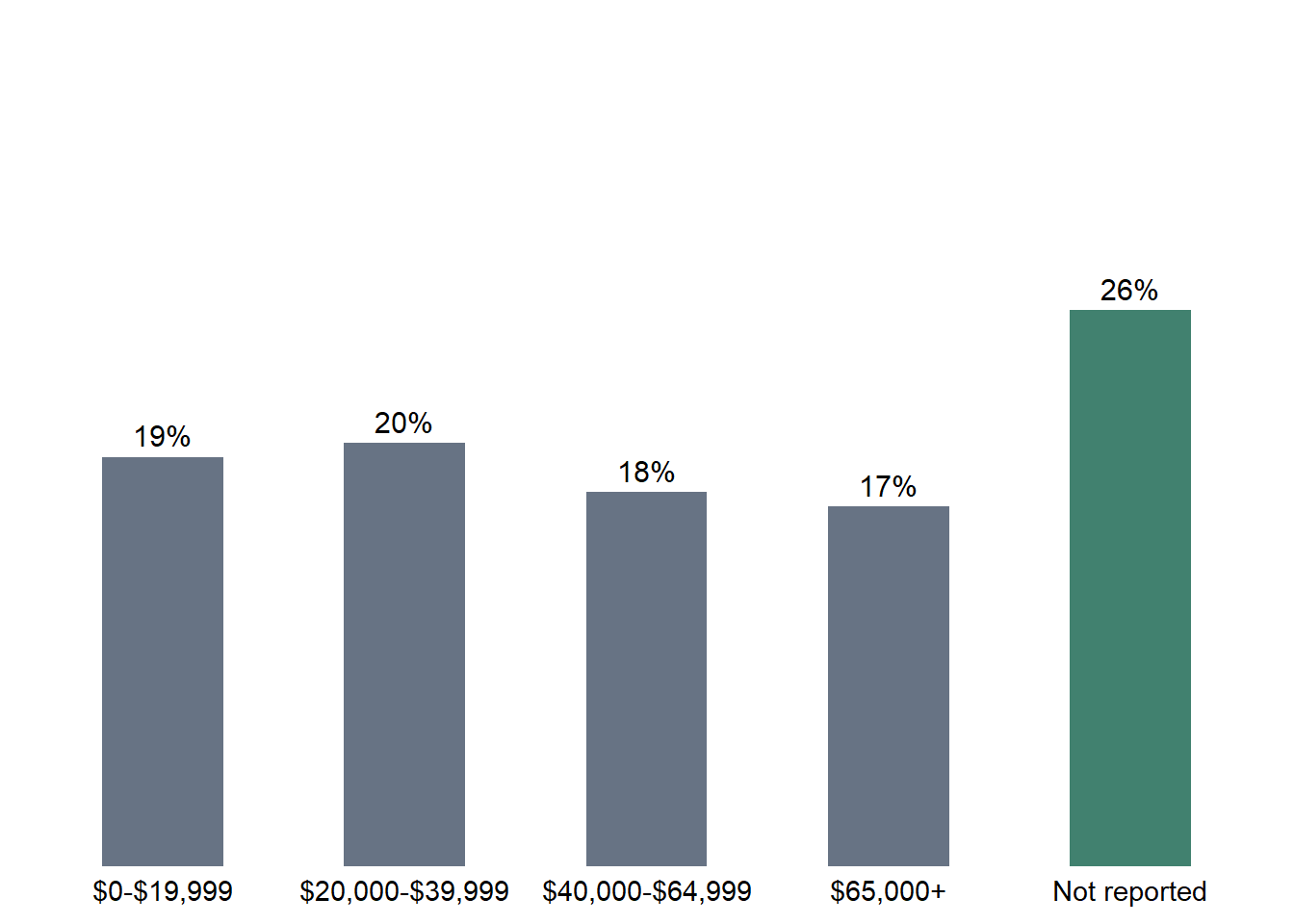
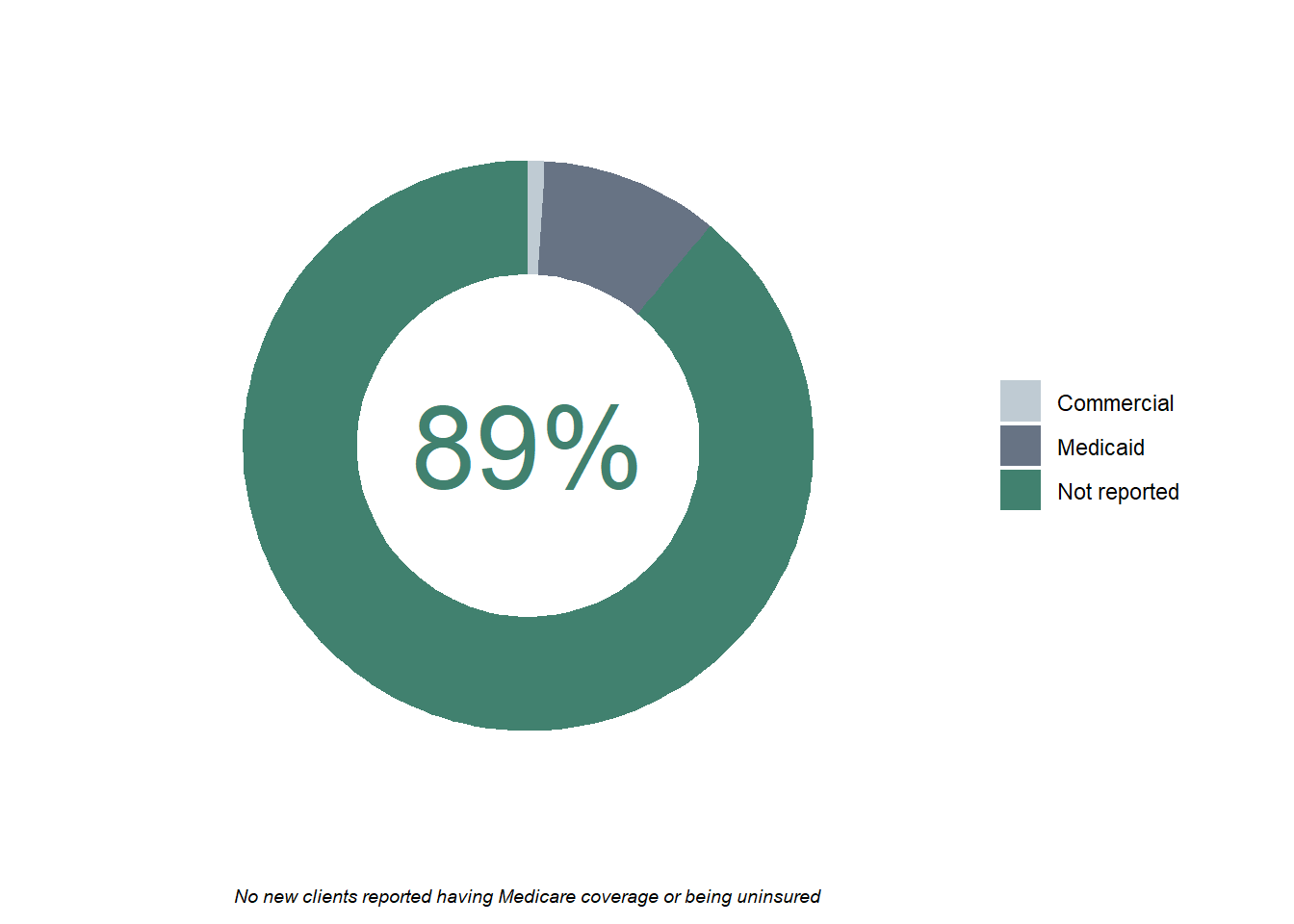
This section presents aggregate demographic information for new clients. Data includes age, gender, race, ethnicity, income, and insurance. Instances of data with a count less than five was suppressed.

TipAlignment with Evaluation Plan

Objective 1: Scope and Reach of Programs

  • How many people does each provider serve? What are the target populations?
  • Age
  • Gender
  • Race
  • Ethnicity
  • Income
  • Insurance

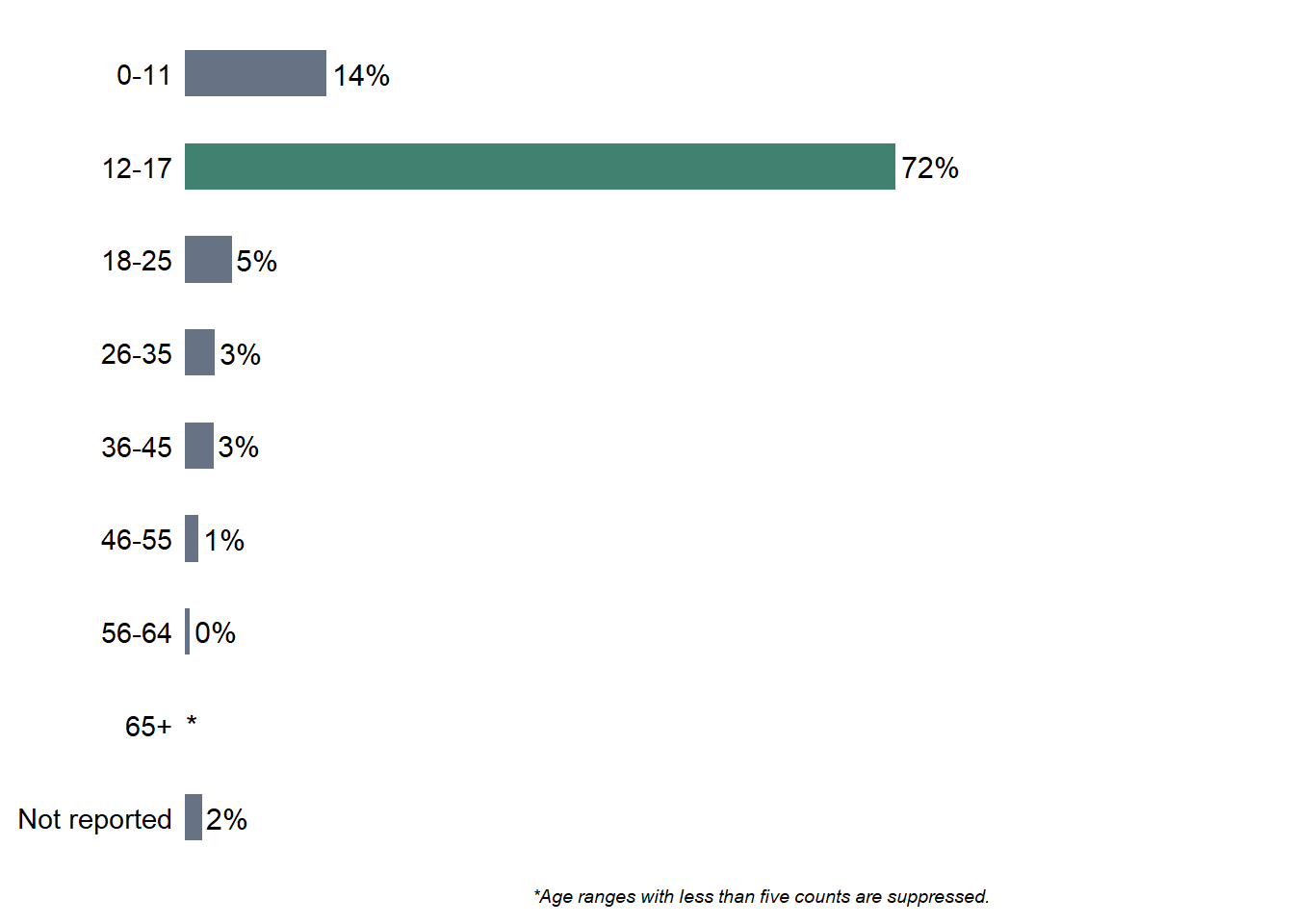
The majority (72%) of new clients are 12-17 years old
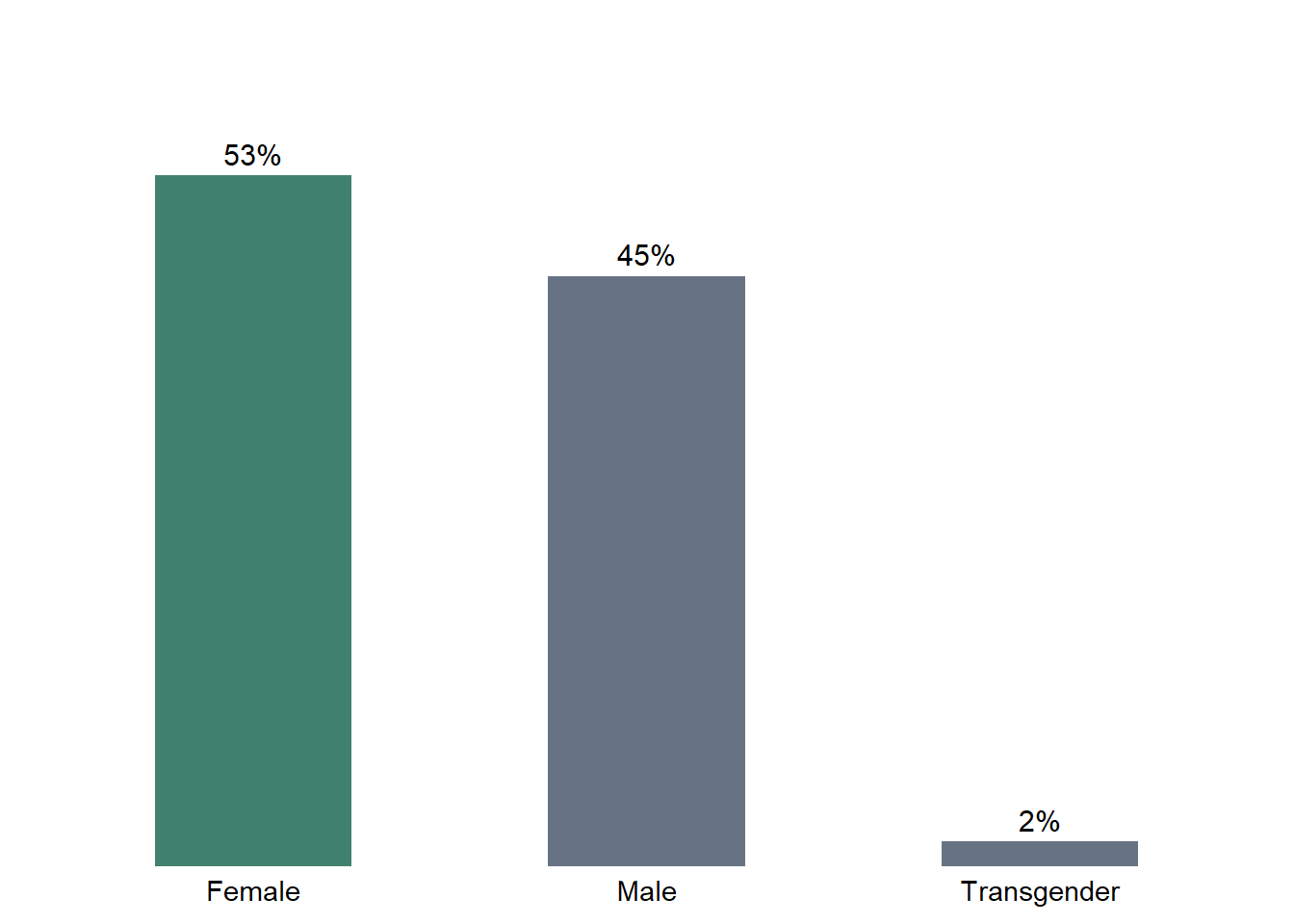
Female clients make up over half (53%) of total new clients
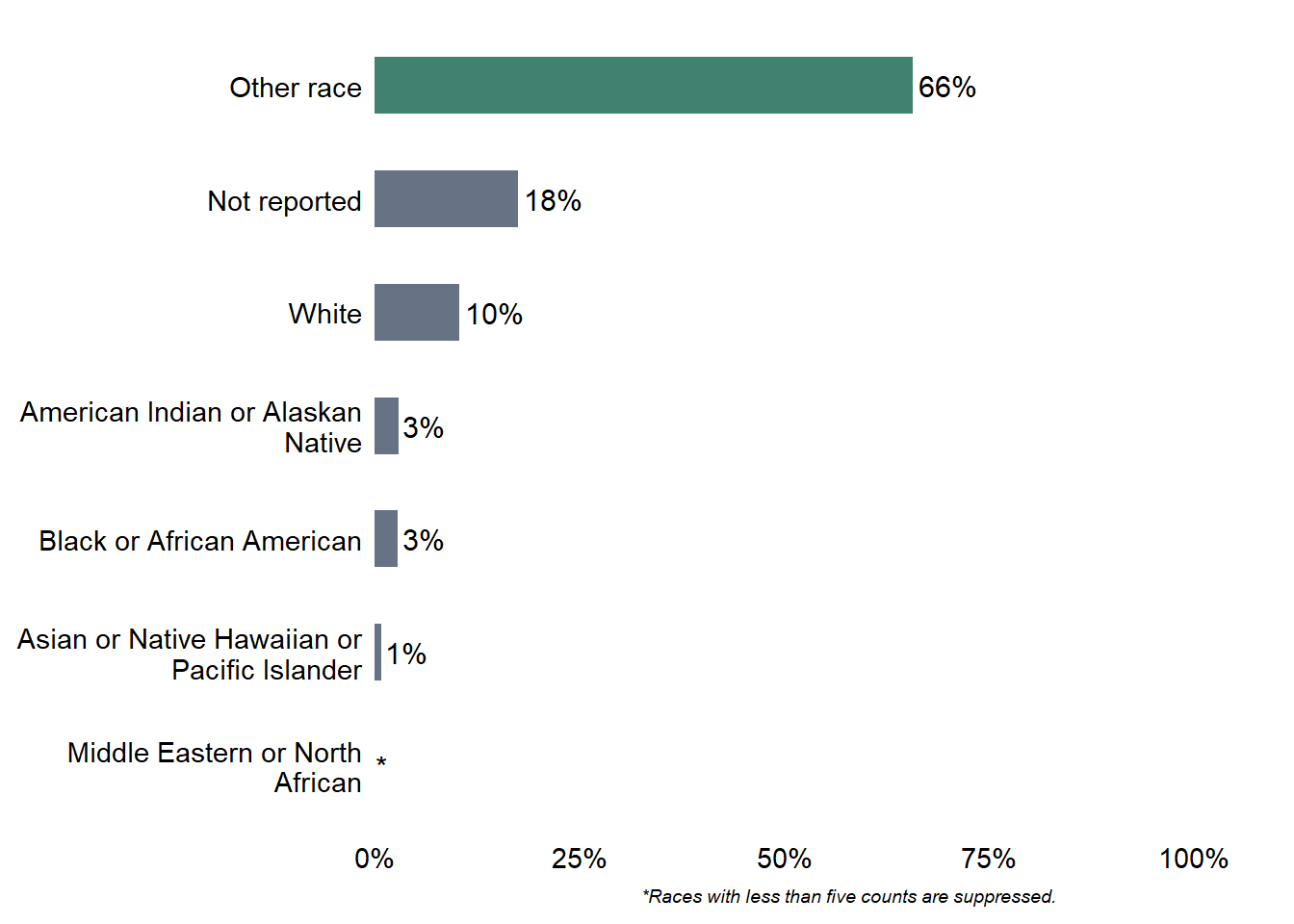
The majority (66%) of new clients are of an Other race
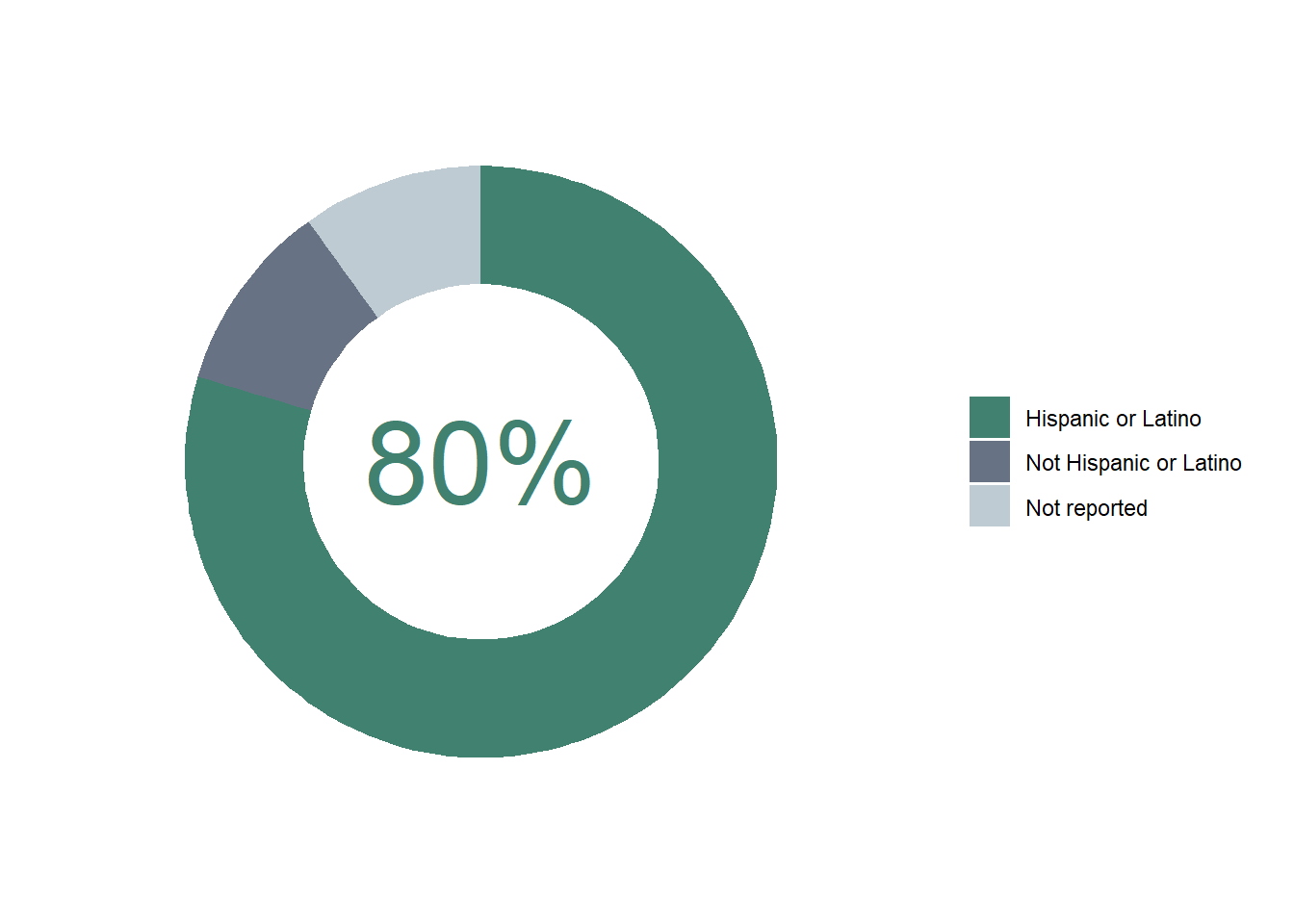
80% of new clients are Hispanic or Latino
26% of new clients did not report their income level
89% of new clients did not report their insurance
 

Copyright 2025, Omni Institute

Omni institute